Screw Instruments Set
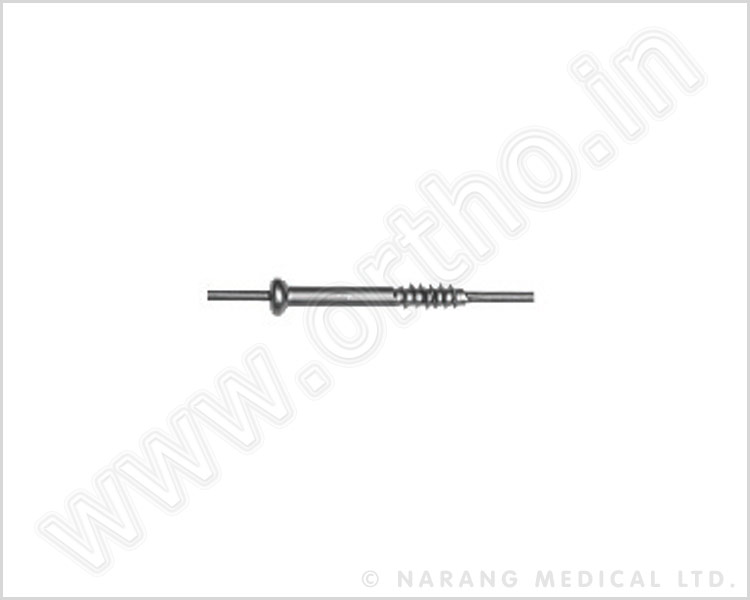
Odontoid Screw - Titanium Partially Threaded

The Odontoid Screw is a precision-engineered implant designed specifically for the fixation of Type II Odontoid fractures. It provides stable fixation and promotes direct fracture healing while preserving physiological motion at the C1–C2 segment. Typically cannulated, the screw allows for guided insertion over a guidewire to ensure accurate placement. Its partially threaded shaft enables controlled compression across the fracture site, facilitating rapid bone union. A self-tapping tip simplifies insertion by eliminating the need for pre-drilling, while low-profile or headless options minimize soft tissue irritation and postoperative discomfort. Available in multiple lengths and diameters, the Odontoid Screw is optimized for anterior cervical approaches and individualized patient anatomy.

Indications:
  • Acute, recent Type II Odontoid fractures (especially <6 weeks old)
  • Minimally displaced or reducible fractures
  • Fracture line oriented horizontally or anteriorly oblique for effective compression
  • Patients with good bone quality, typically younger or non-osteoporotic
  • Absence of comminution at the fracture site
  • Intact transverse ligament ensuring atlantoaxial stability
  • Anatomical suitability for anterior screw insertion (no thoracic deformities or short neck)
  • Cases where preservation of cervical spine motion is preferred over posterior fusion
Length in mm Code
30 8640.30
35 8640.35
40 8640.40
45 8640.45
50 8640.50
55 8640.55
60 8640.60
65 8640.65

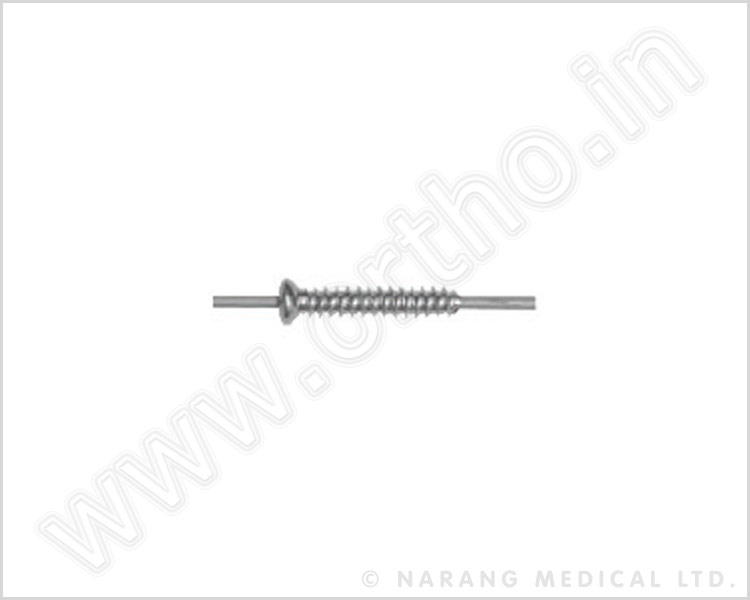
C1/C2 Transarticular Screw - Titanium Fully Threaded

Trans-articular fixation, also known as C1–C2 trans-articular screw fixation, is a posterior cervical spine stabilization technique used primarily for atlantoaxial instability. The technique involves the insertion of screws from the lateral mass of C2 through the C1–C2 facet joint into the lateral mass of C1, achieving strong biomechanical fixation across the atlantoaxial complex. The trans-articular screw provides rigid fixation, promotes fusion, and eliminates pathological motion at the C1–C2 level. It is typically used in conjunction with bone grafting and may be combined with posterior wiring. The screws are usually solid or cannulated, self-tapping, and available in various lengths and diameters to accommodate anatomical variability. This technique requires precise imaging and reduction of the C1–C2 complex before screw placement, as malposition may risk injury to the vertebral artery.

Indications:
  • Atlantoaxial instability due to trauma (e.g., odontoid fracture nonunion, ligament injury).
  • Type II odontoid fracture with nonunion or in cases not suitable for anterior odontoid screw fixation.
  • Congenital anomalies causing instability (e.g., os odontoideum).
  • Rheumatoid arthritis with atlantoaxial subluxation.
  • C1–C2 instability in tumors or infections involving the upper cervical spine.
  • Post-traumatic instability or recurrent atlantoaxial dislocation.
  • Failed previous fixation or fusion requiring revision surgery.
  • Occipito-cervical instability when included in a longer fusion construct.

Length in mm Code
30 8644.30
35 8644.35
40 8644.40
45 8644.45
50 8644.50
55 8644.55
60 8644.60
65 8644.65

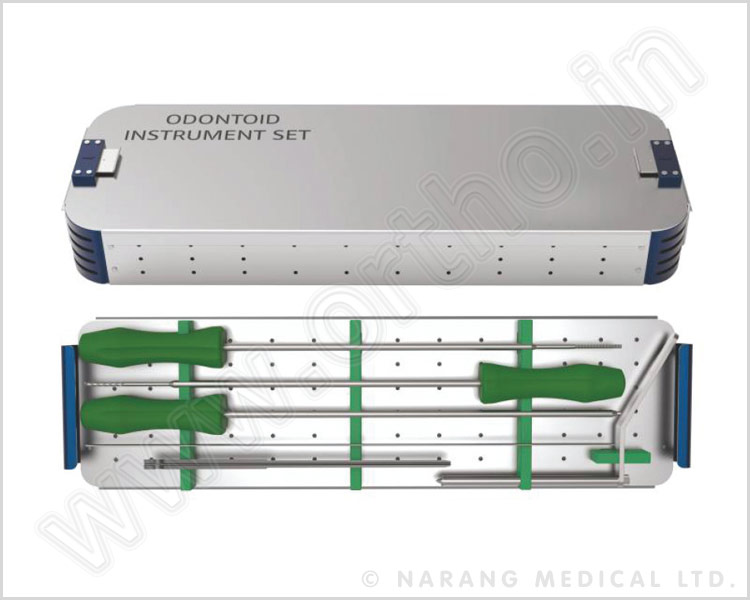
Odontoid And Trans-Articular Screw Fixation Instrument Set
AS1707 Odontoid And Trans-Articular Screw Fixation Instrument Set
Codes Set Consisting of : Units
AS1707.001 Odontoid And Trans-Articular Screw Canulated Tap 1
AS1707.006 Odontoid And Trans-Articular Screw Cannulated Drill 1
AS1707.011 Odontoid And Trans-Articular Screw Cannulated Screwdriver 1
AS1707.016 Odontoid And Trans-Articular Screw Sleeve 1
AS1707.021 Odontoid And Trans-Articular Screw Trocar 1
AS1707.026 Odontoid And Trans-Articular Screw Guide Wire 1
AS1707.031 Odontoid And Trans-Articular Screw Depth Gauge 1
Most Searched Items